
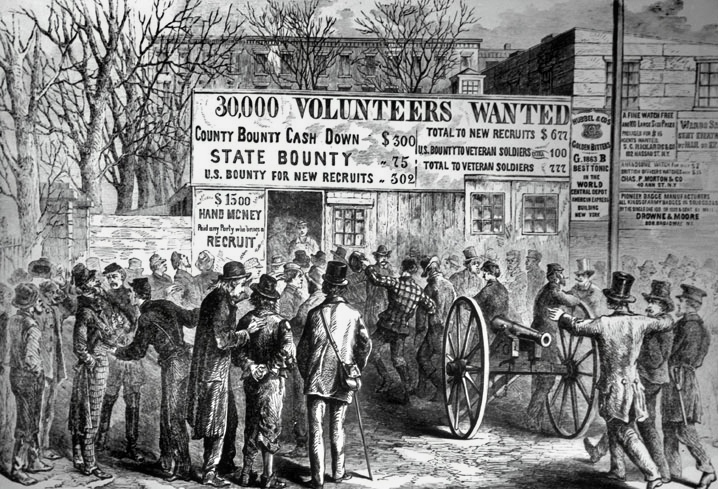
The American Civil War: A Turning Point in Military History
The American Civil War, fought from 1861 to 1865, was a seminal conflict of the 19th-century for both U.S. history and global military history. The war emerged from a convoluted web of longstanding disagreements between the Northern and Southern states over slavery, states’ rights, economic disparities, and political power.
In the South, eleven states seceded from the Union to form the Confederate States of America, asserting their right to maintain a system rooted in slave labor. The North, loyal to the Union, fought to preserve the integrity of the United States and ultimately moved towards ending the institution of slavery. The conflict claimed an estimated 620,000 lives, making it one of the deadliest wars in American history.
The American Civil War is renowned for its military technology and tactics innovations. It marked the transition from traditional warfare to the modern warfare era. This change was primarily driven by industrialization, which allowed for the mass production of weapons and improved transportation and communication.
- Introduction of Modern Weaponry: The war introduced new armaments, including rifled muskets, repeating rifles, ironclad ships, and the Gatling gun, the precursor to the modern machine gun. These technologies led to greater firepower but also dramatically increased casualties.
- Development of Trench Warfare: The Civil War foreshadowed the trench warfare of World War I, as the enhanced range and accuracy of rifles made traditional battle formations obsolete. Armies began to dig trenches and other fortifications, leading to protracted stalemates and changing the nature of military engagement.
- Role of Railways and Telegraph: The extensive use of railroads and the telegraph revolutionized military logistics and communications. Railways allowed for the rapid deployment and movement of troops and supplies. The telegraph enabled instant communication across vast distances, changing armies’ command and control structure.
- Evolution of Naval Warfare: The Battle of Hampton Roads marked a significant transition in naval warfare with the first meeting in combat of ironclad warships, the USS Monitor and the CSS Virginia. The battle signaled the end of the era of wooden warships.
- Birth of Total War: The Civil War marked one of the first instances of “total war,” where the destruction wasn’t limited to opposing armies but also aimed at civilian infrastructure to undermine the enemy’s economy and morale. Union General William Tecumseh Sherman’s “March to the Sea” is a classic example of this strategy.
The American Civil War’s lasting impact on military history is undeniable. It gave birth to many military strategies and technologies shaping future conflicts. The war also had significant cultural, political, and societal implications, including the abolition of slavery, reshaping the United States into a more unified and centralized nation.


 Gettysburg Wargame Society