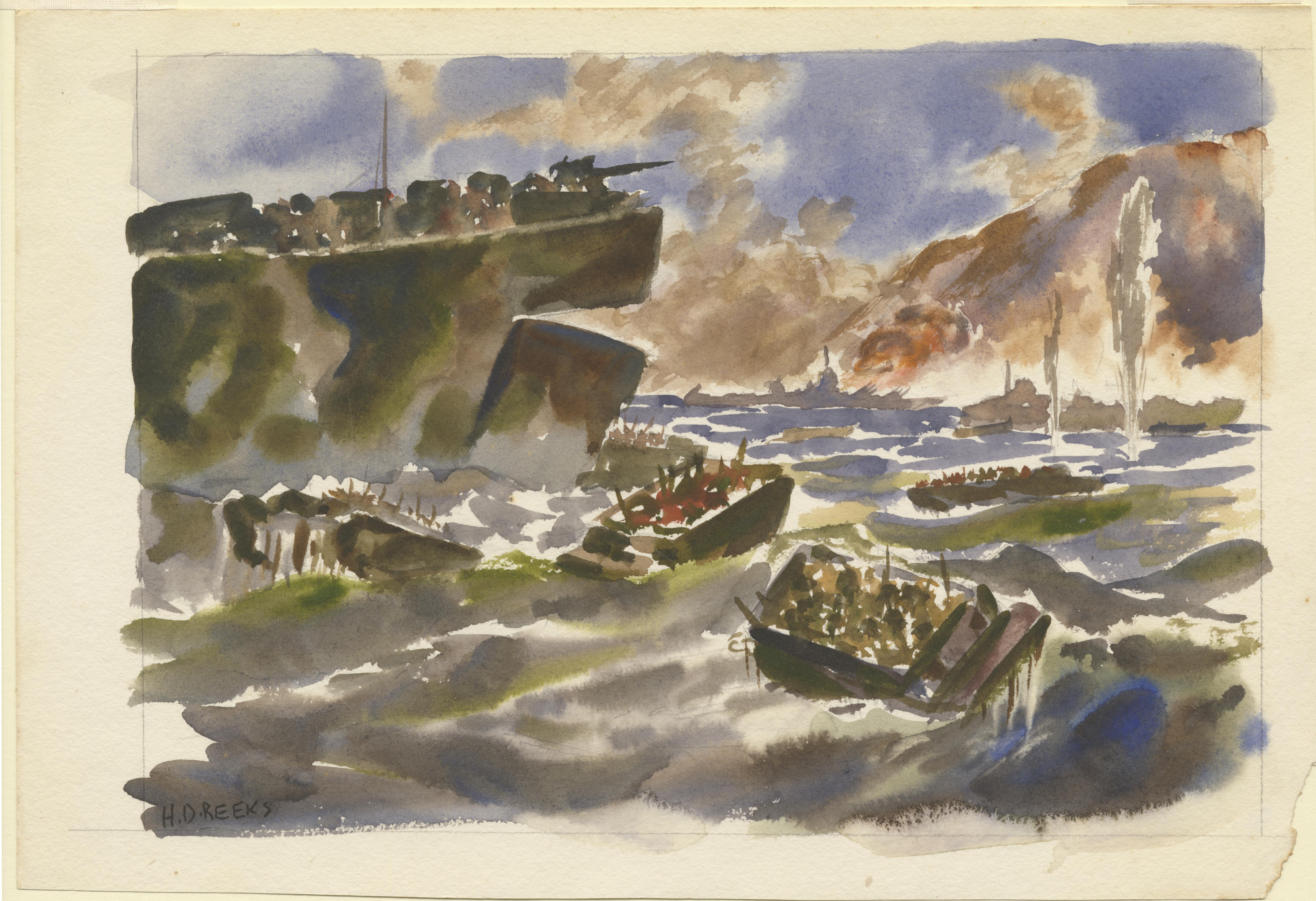
Reeks, Harry D., Artist. Military Transport Boats at Iwo Jima. Japan, 1945. [Place of Publication Not Identified: Publisher Not Identified, to 1982] Photograph. https://www.loc.gov/item/2021669872/.
Why Study Military History?
Military history is fundamental to meaningful wargaming. It provides the context needed to understand not only what happened on the battlefield, but also why commanders made particular decisions, how armies functioned, and how terrain, logistics, leadership, technology, and human behavior shaped the outcome.
Authenticity and Immersion
Historical knowledge enables designers and players to recreate military operations with greater accuracy and depth. When scenarios reflect the actual forces, terrain, objectives, and limitations of a campaign, the result is a more immersive and rewarding experience.
Strategy and Decision-Making
Military history offers countless examples of successful strategies, costly mistakes, and difficult command decisions. Studying these cases helps wargamers better understand tactics, operational art, leadership, and the relationship between military objectives and available resources. It also encourages players to consider the circumstances commanders faced rather than judging their decisions solely by the final outcome.
Historical Education and Understanding
Wargaming provides an engaging way to explore the past. By participating in historically grounded scenarios, players can develop a deeper appreciation for the people, events, and conditions that shaped a battle or campaign. This active approach to history often reveals complexities that are difficult to capture through reading alone.
Rules and Game Mechanics
The rules of a well-designed wargame are intended to represent the realities and uncertainties of warfare. Movement rates, command limitations, combat systems, morale, supply, terrain, and communications all reflect historical conditions. Understanding the history behind these mechanics helps players appreciate why a game works as it does and how its systems model the challenges of military command.
Scenario Design and Modification
Military history is equally valuable to those who create original scenarios, campaigns, or game modifications. Historical research helps designers construct scenarios that are accurate, balanced, and plausible while identifying meaningful alternatives and “what-if” possibilities.
Community and Discussion
A shared interest in military history strengthens the connection among historians, researchers, designers, and wargamers. Thoughtful discussions about campaigns, commanders, tactics, and historical interpretations encourage continued learning and bring new perspectives to the gaming table.
The Gettysburg Wargame Society’s Mission
The study of military history enriches every aspect of wargaming—from authenticity and strategic thought to education, creativity, and community. The Gettysburg Wargame Society explores battles, campaigns, tactics, military technology, notable figures, and the broader human experience of warfare.
Through articles, discussions, historical scenarios, and tactical simulations, the Society seeks to connect careful historical study with informed and engaging wargaming.