
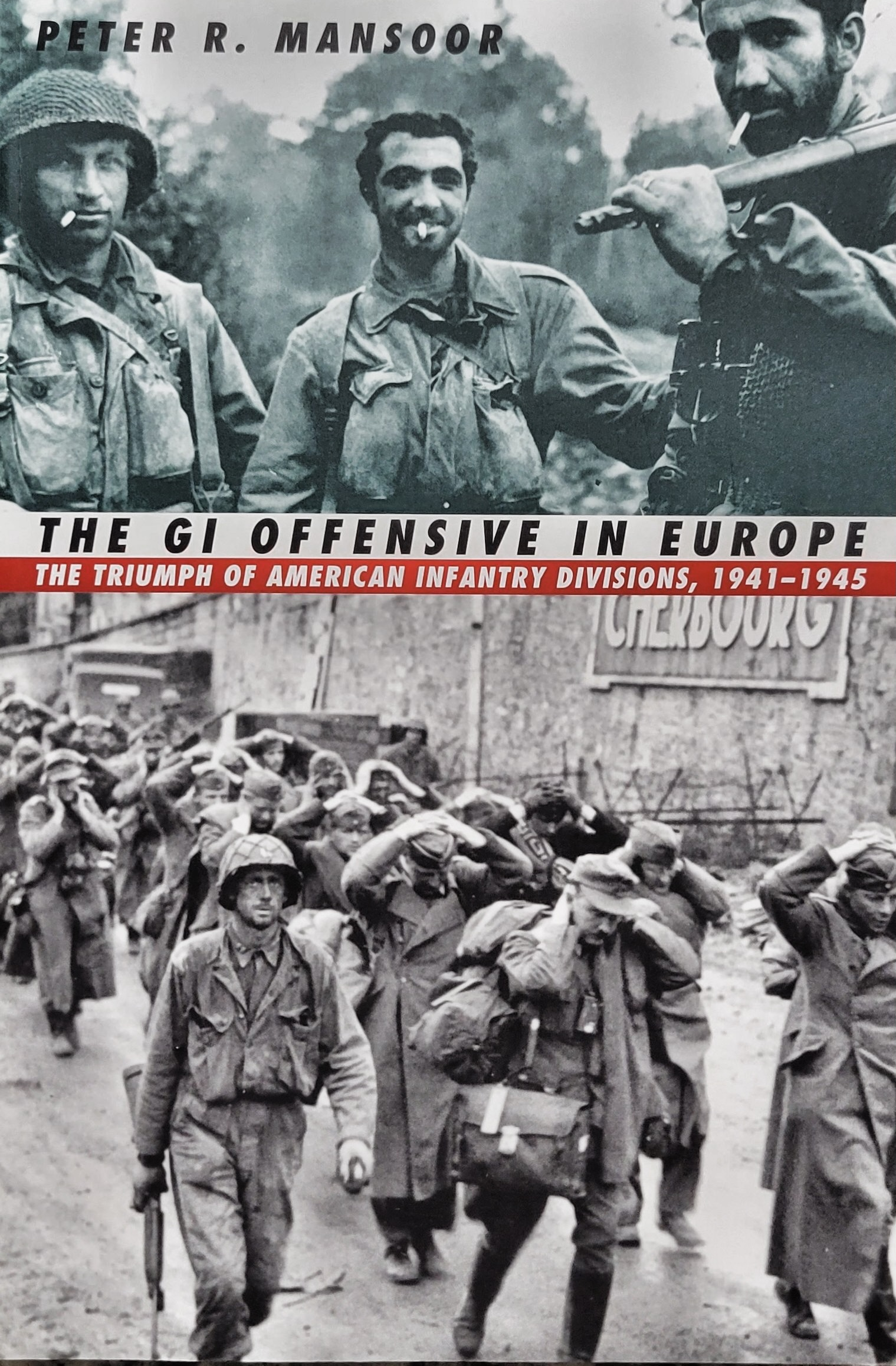
Peter R. Mansoor. The GI Offensive in Europe: The Triumph of American Infantry Divisions, 1941-1945. Lawrence, KS: University Press of Kansas, 1999.
On December 8, 1942, the United States realized the inevitability of American intervention in World War II against the Japanese in the Pacific and Hitler’s Nazi Wehrmacht forces demolishing Allied resistance in Europe. After Pearl Harbor, the United States Army mobilized, trained, and equipped 89 infantry divisions that would serve across every theater of battle of World War II. In his book, The GI Offensive in Europe: The Triumph of American Infantry Divisions, 1941-1945, Peter R. Mansoor explains the origins of the infantry division as a combat organizational unit, the training, manning, and equipping of the divisions, and how those divisions performed on the battlefield against Hitler’s elite Wehrmacht forces.
Mansoor, current professor and the General Raymond E. Mason Jr. Chair in Military History at the Ohio State University, served in the United States Army for 26 years, graduating first in his class at West Point in 1982 and ultimately achieving the rank of Colonel in the infantry. Mansoor’s time as the G-3 (Operations Officer) for the 4th Infantry Division and formal training in history rounds out his eminent qualification in writing this monograph dedicated to explaining how the Army managed to mobilize and develop combat-effective infantry divisions during World War II.
Mansoor’s thesis states that an “Examination of American infantry divisions will help isolate those factors that proved critical to the development of combat effectiveness in the American army between 1940 and 1945 and will put the achievements of the American soldier back into their rightful place in history.”[1]His primary argument provides a comprehensive approach to understanding the difficulties the United States Army faced in creating and maintaining combat-effective infantry divisions while meeting the government’s limitation of 89 total Army infantry divisions.
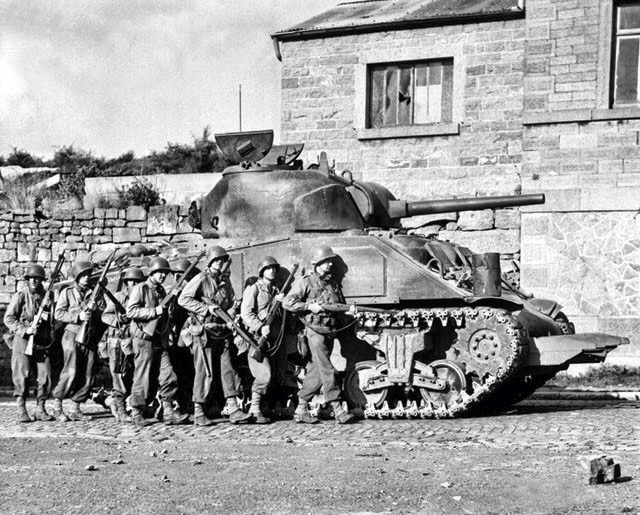
The chronological monograph explains the divisions’ early mobilization, organization, and training. Most of the evidence is dedicated to divisional performances against the enemy, starting with operations in North Africa and Italy through the Normandy invasions into the battle of the Bulge and beyond. For example, Mansoor describes how the 100th Infantry Division’s operations on the Maginot Line highlight the adaptability of divisional tactics as a force multiplier. He explains that after the 100th Division’s inability to seize an objective, the commander quickly modified the tactics to achieve success, an “Extraordinary accomplishment for a division that had been in combat for only one month and had never trained for such an operation.”[2
Mansoor’s theme seeks to synthesize Army official records about performance with critical issues affecting combat efficiencies, such as personnel turnover and ever-changing tactics, techniques, and procedures. While he effectively maintains his key arguments throughout the work, additional information regarding divisional-level detailed rotational schedules would greatly assist the reader in further understanding the impacts of combat replacements and extended duration deployments on combat effectiveness.
Mansoor’s insights into infantry division operations during World War II make an excellent resource for any professional military historian or active-duty military leaders seeking to understand further and research military organizational constructs, limitations, and the generation of combat effectiveness at a combined-arms divisional level. The robust bibliography of provided primary source material relating to specific Army units during critical operations provides an excellent starting point for continued understanding of detailed unit histories during the war. Overall, Mansoor’s monograph dramatically contributes to the current historiography on infantry organizations and capabilities development and is invaluable to understanding infantry operations during World War II.
[1] Peter R. Mansoor, The GI Offensive in Europe: The Triumph of American Infantry Divisions, 1941-1945 (Lawrence, KS: University Press of Kansas, 1999), 15.
[2] Mansoor, The GI Offensive in Europe, 212.
© Gettysburg Wargame Society 2021-2023, All Rights Reserved.
 Gettysburg Wargame Society