
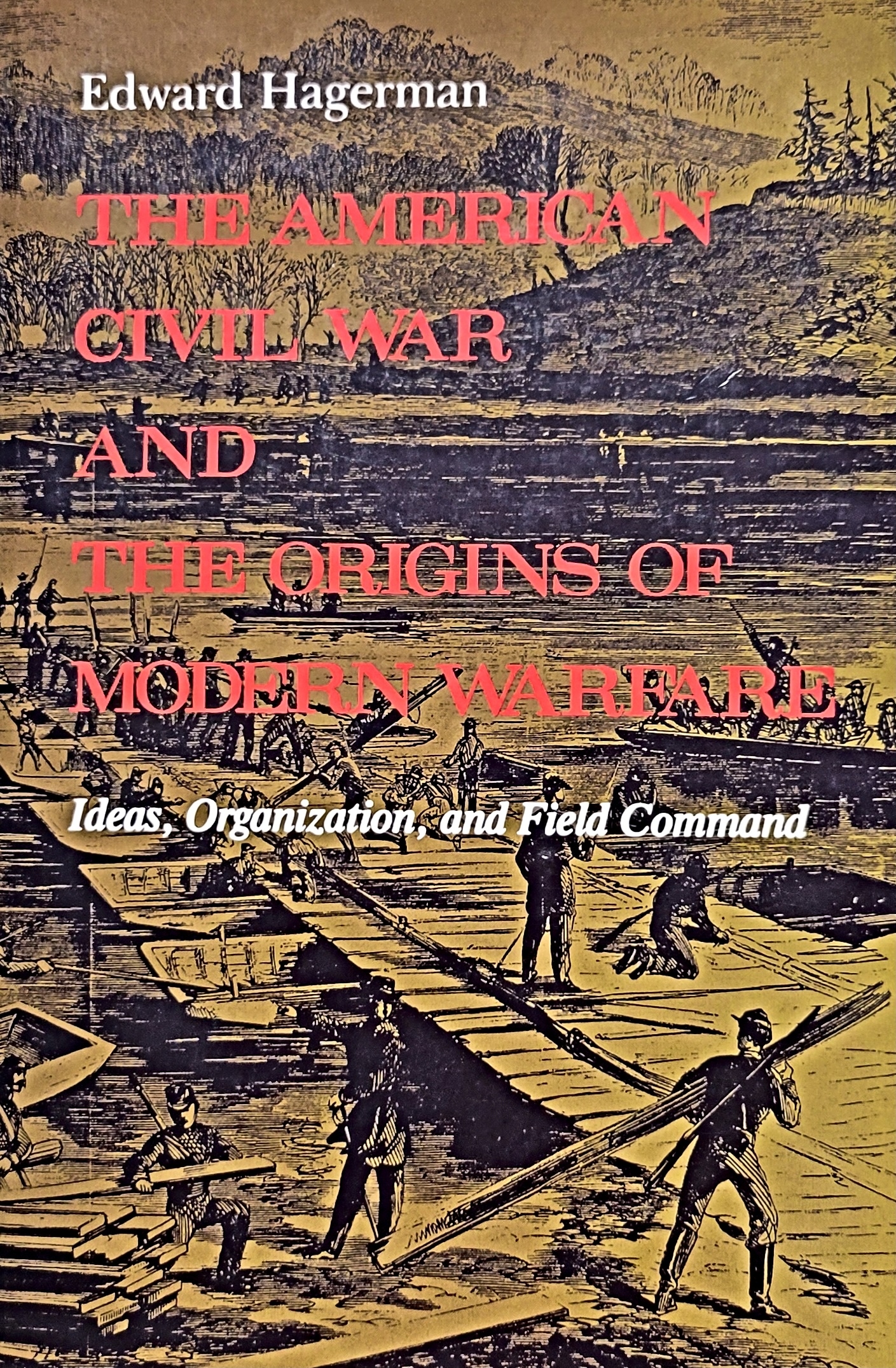
Edward Hagerman. The American Civil War and the Origins of Modern Warfare. Bloomington: Indiana University Press, 1988.
The bloody four-year conflict of the American Civil War resulted in over 620,000 deaths and untold pain and suffering for those who lived through the war. This war not only changed American society but revolutionized the face of warfare. When applied to the Civil War’s citizen armies, the technological developments of the industrial revolution transformed the battlefield and ushered in new and emerging forms of modern warfare. In his book, The American Civil War and the Origins of Modern Warfare, Edward Hagerman explains how these technological advancements in logistics, weapons, and transportation led to developments in warfare that impacted the emergence of modern strategy and trench warfare.
Hagerman, a former Associate Professor of History at York University in Toronto, has written multiple published works on military history and strategy, but none as influential as this work. Hagerman details his specific thesis declaring this work as a “Study of how tactical and strategic ideas and organizations evolved in response to mid-nineteenth-century American industrial technology, society, ideology, and geography, as well as to the tactical and strategic objectives of Civil War armies.”[1] He explains how nineteenth-century developments applied to the Euro-centric antebellum theory and doctrine evolved the organization, staff functions, and military thought influenced the strategies of both Eastern and Western theaters of war.
The book is organized to flow thematically, starting with McClellan’s reorganization of the Union Army in the east and the subsequent cause and effects articulated on the battlefield from Manassas through Chancellorsville and post-Gettysburg. While many historians choose to evaluate the Civil War through traditional narratives of battles and campaigns, Hagerman first sought to understand the origins of Civil War American military thought and apply that framework to the battlefield. He then transitions to the section on the Confederacy’s organizational revisions in the Eastern theater and subsequent employment in the theater. The analysis determines that “Confederate, like Union, strategists were raised in the Jominian tradition emphasizing the destruction of the enemy’s army, and like their opponents appreciated the difficulty of doing so in mid-nineteenth-century American circumstances.”[2] The second half of the book deals with the emergence of trench warfare in the Western Theater, its impact on the development of strategic thought, and how the decline of engineering capabilities applied on the battlefield led to the attritional warfare concept so commonly associated with the Civil War.
By analyzing specific battles and campaigns within the framework of technological advancements leading to shifts in strategy, Hagerman articulates the origins of the evolving form of warfare. For example, Hagerman’s focus on logistics and railroad exploitation explains how Civil War commanders increased mobility and maneuverability. He asserts, “The condensation of rations and the streamlining of the train that had been going on since 1862—culminating in the flying column—all increased the army’s mobility away from its base of supply.”[1] Hagerman asserts that the tactical flexibility afforded through the development of efficiency in transportation and logistics, compounded by evolutions in rifling and weaponry, foreshadowed the future application of warfare. These tenants, employed in conjunction with battlefield engineering and trench warfare that originated during the Civil War, became the foundation of the origins of modern warfare.
Hagerman’s evaluations and insights provide a robust understanding of the strategies, tactics, and military revolutions associated with the American Civil War. Civil War scholars and military historians alike will appreciate and benefit from this book’s depth of information on the Civil War and its impact on modern war. Specifically, Hagerman’s work can provide insight into future research on how the military lines of effort and strategy of the American Civil War influenced World War I, World War II, and the development of modern maneuver warfare.
[1] Edward Hagerman, The American Civil War and the Origins of Modern Warfare (Bloomington: Indiana University Press, 1988), xviii.
[2] Hagerman, The American Civil War, 102.
[3] Hagerman, 246.
© Gettysburg Wargame Society 2021-2023, All Rights Reserved.
 Gettysburg Wargame Society