
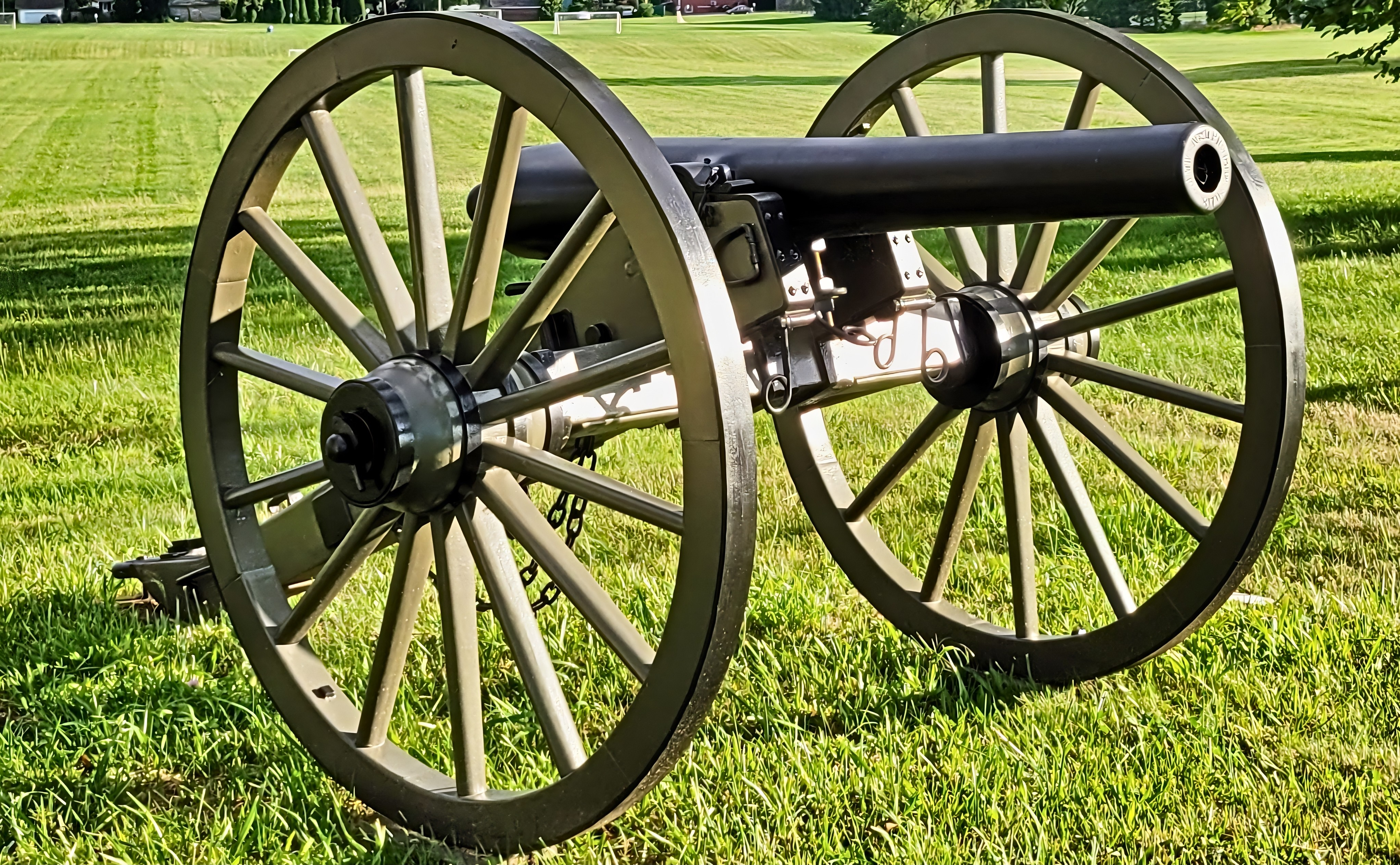
Artillery played a significant role during the Civil War, with innovations in rifling and ammunition making cannons more accurate and deadly. While often overlooked, the carriage was a vital component in the effective deployment and use of these powerful weapons. Despite their heavy appearance, the design of the Civil War-era field artillery carriage provided excellent maneuverability.
A trained crew could rapidly change the cannon’s position on the battlefield and quickly attach it to a limber and team of horses for extended movements. Hardwoods, such as oak, were predominantly used to increase the framework’s durability, and iron fittings and hardware was used to hold the carriage together and provide reinforcement.
The carriages moved on large wooden spoked wheels, often bound with iron, for added strength and durability. Although not part of the carriage itself, the limber (with an ammunition chest on top) connected to the artillery piece and allowed for rapid cannon and ammunition movement.
The carriage’s main components consist of the following components:
- The stock trail is the main beam of the carriage that extends from the rear of the carriage and was used as a handle for the crew to maneuver the gun and as a mounting point for the limber (a two-wheeled cart hooked up to the trail for transportation).
- The cheeks are the two main side frames of the carriage and support the cannon tube, providing a mounting point for the trunnions (the cylinders on either side of the cannon that allowed it to pivot up and down).
- The axle is positioned below the trunnions and cannon tube and connects the two wheels of the carriage.
- The elevating screw allowed for the vertical aiming of the cannon.

©Gettysburg Wargame Society 2021-2023, All Rights Reserved.
 Gettysburg Wargame Society